
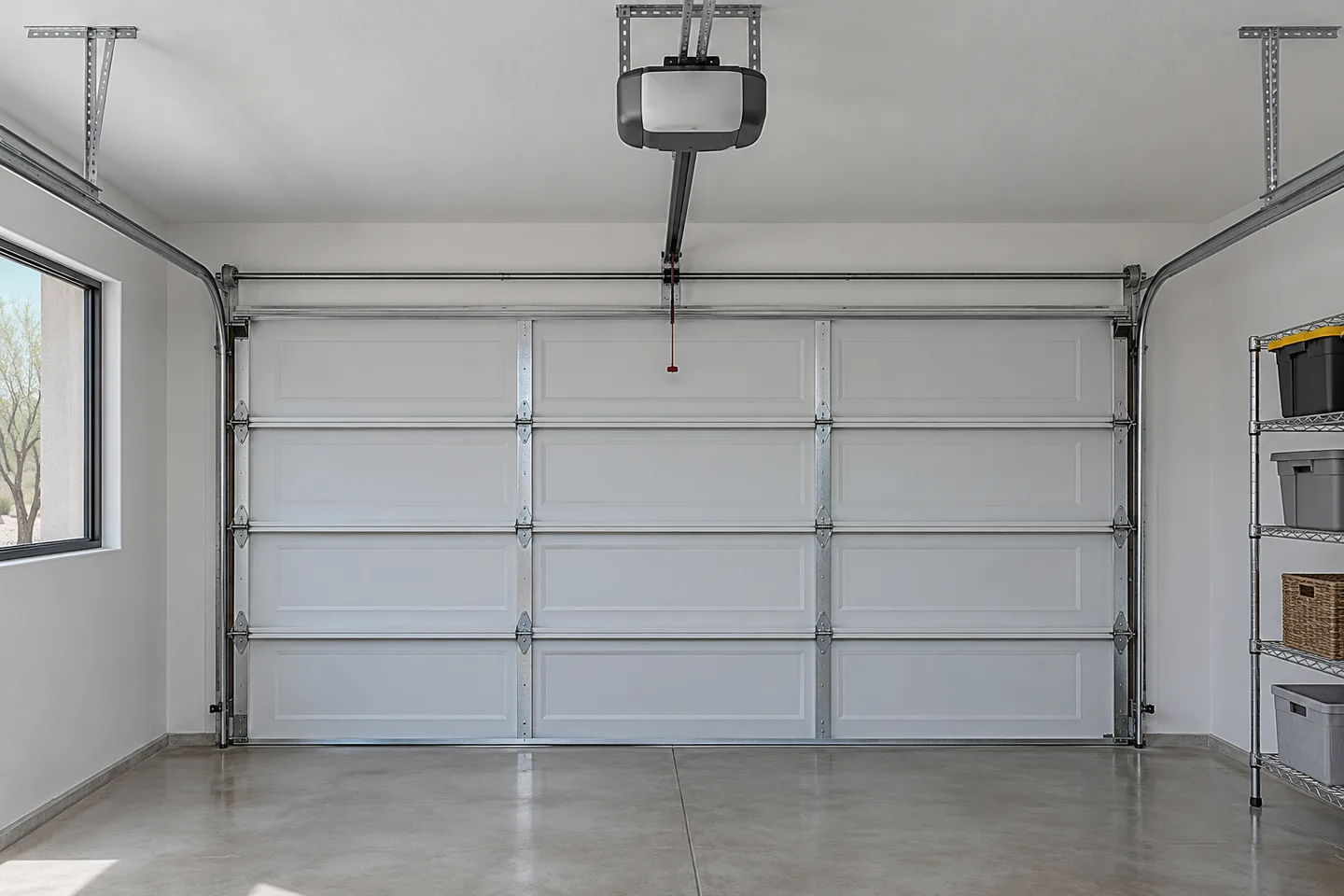
The wall button opens the door. The remote stays silent. That difference narrows the conversation, but it does not prove the remote needs replacing. Controls, model settings and compatibility can all matter.
Use this guide to describe the symptom, not to bypass a safety feature or work on springs and cables. If the door is crooked, a cable is loose or the door appears mechanically damaged, stop operating it and keep people clear.
Separate the controls in your description
Say what happens from the wall button, the remote and any wireless keypad. Does the opener make a sound? Is there an indicator light or a message? Does the fault happen every time or only at particular times? A short description of what you have already observed is enough.
Do not keep cycling a struggling door to collect more evidence. Likewise, a photo of a label is useful only if you can take it safely. There is no need to climb onto something unstable to find a model number.
The model matters
Some wall consoles have a lock or vacation function that prevents certain wireless controls from operating the door. Genie documents this behavior for specific Series II consoles. That is not a universal instruction for every opener with a lock-shaped button.
Check the manual for the exact equipment or ask the service provider to identify it. Similar-looking remotes may use different communication systems. A device bought online can look right while being incompatible with the opener.
Opening and closing are different clues
If the door opens but will not close normally, describe that separately from a remote that never responds. An obstruction, sensor issue or mechanical problem can produce different behavior. Do not tape over, disconnect or otherwise bypass safety sensors.
Direct sunlight can affect certain sensor arrangements. LiftMaster offers a sunblocker accessory for compatible equipment, but that fact does not diagnose an afternoon fault at a Goodyear home. Mention timing, visible changes and the model. Let inspection establish the cause.
What to ask before approving a repair
Ask which component is believed to have failed and what supports that conclusion. Is the proposed work a control replacement, an opener repair or a door-hardware repair? Those are different scopes. Clarify the visit charge, parts, labor and any optional upgrades.
After the work, ask for the included controls and normal safety functions to be demonstrated. Keep the applicable manual and warranty information. Our garage door repair page explains the broader distinction between the opener and the moving door.
If you are also changing access after a move, list the house keys separately. A remote change does not rekey the door from the garage into the house. That is a separate lock rekeying question.
Tell us what has happened and where the job is. You do not need to name the fault before you call.
Contact LockReach GoodyearBack to Goodyear locksmith & garage door help